Search Gas Turbine Power for Data Center Publications search was updated real-time via Filemaker on:
Search Completed | Title | High-Speed Generators for Power-Dense, Medium-Power, Gas Turbine Generator Sets
Original File Name Searched: ASNEJournalHSATGAlternatives.pdf | Google It | Yahoo | Bing
Page | 005 1
2
3
4
5
6
7
8
9
10
11
12
13
14
15
16
17
18
19
20
21
22
23
24
25
26
27
28
29
30
31
32
33
(BWUS NEJ 20.PDF 12-Sep-07 21:9 1495936 Bytes 19 PAGES n operator=DS.SureshBabu)
34
35
36
37
38
39
40
41
42
43
44
45
46
47
48
The application of water cooling to rotors is less
proven than water cooling of stators. Several
prototype water-cooled rotors were placed in
utility service in the 1970s. Westinghouse devel-
oped a water-cooled rotor test generator in the
1970s, that operated successfully at 3,600 r.p.m.
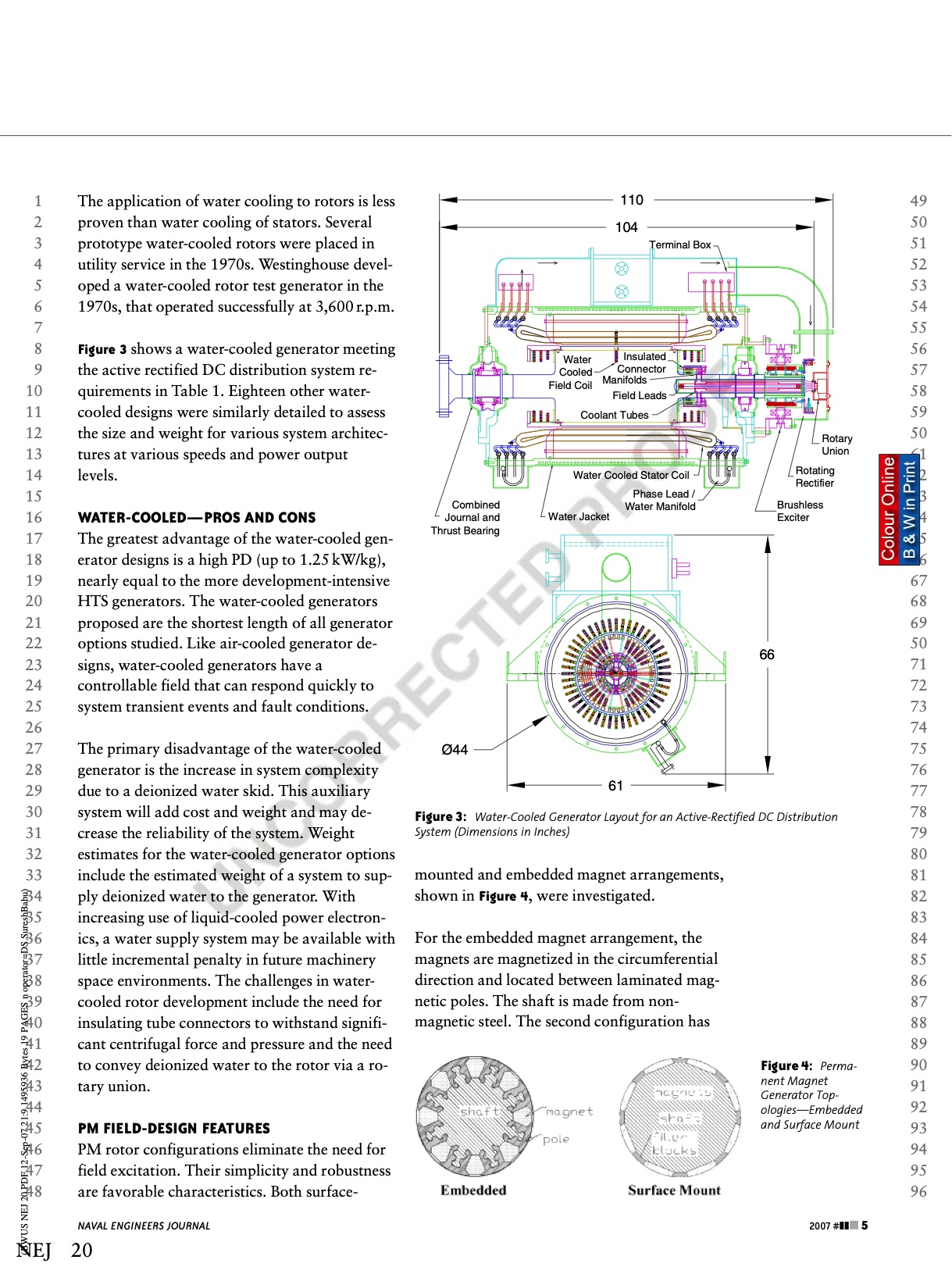
Figure 3 shows a water-cooled generator meeting
the active rectified DC distribution system re-
quirements in Table 1. Eighteen other water-
cooled designs were similarly detailed to assess
the size and weight for various system architec-
tures at various speeds and power output
levels.
WATER-COOLED—PROS AND CONS
The greatest advantage of the water-cooled gen-
erator designs is a high PD (up to 1.25 kW/kg),
nearly equal to the more development-intensive
HTS generators. The water-cooled generators
proposed are the shortest length of all generator
options studied. Like air-cooled generator de-
signs, water-cooled generators have a
controllable field that can respond quickly to
system transient events and fault conditions.
The primary disadvantage of the water-cooled
generator is the increase in system complexity
due to a deionized water skid. This auxiliary
system will add cost and weight and may de-
crease the reliability of the system. Weight
estimates for the water-cooled generator options
include the estimated weight of a system to sup-
ply deionized water to the generator. With
increasing use of liquid-cooled power electron-
ics, a water supply system may be available with
little incremental penalty in future machinery
space environments. The challenges in water-
cooled rotor development include the need for
insulating tube connectors to withstand signifi-
cant centrifugal force and pressure and the need
to convey deionized water to the rotor via a ro-
tary union.
PM FIELD-DESIGN FEATURES
PM rotor configurations eliminate the need for
field excitation. Their simplicity and robustness
are favorable characteristics. Both surface-
NAVAL ENGINEERS JOURNAL NEJ 20
110
104
Terminal Box
Water
Cooled
Field Coil
Insulated
Connector
Manifolds
Field Leads
Coolant Tubes
Combined
Journal and
Thrust Bearing
Water Cooled Stator Coil
Phase Lead /
Water Manifold
Water Jacket
Rotary
Union
Rotating
Rectifier
Brushless
Exciter
66
Ø44
61
Figure 3: System (Dimensions in Inches)
Water-Cooled Generator Layout for an Active-Rectified DC Distribution
mounted and embedded magnet arrangements,
shown in Figure 4, were investigated.
For the embedded magnet arrangement, the
magnets are magnetized in the circumferential
direction and located between laminated mag-
netic poles. The shaft is made from non-
magnetic steel. The second configuration has
Figure 4: Perma-
nent Magnet
Generator Top-
ologies—Embedded
and Surface Mount
2007 #]]& 5
49
50
51
52
53
54
55
56
57
58
59
50
61
62
63
64
65
66
67
68
69
50
71
72
73
74
75
76
77
78
79
80
81
82
83
84
85
86
87
88
89
90
91
92
93
94
95
96 |
