Search Gas Turbine Power for Data Center Publications search was updated real-time via Filemaker on:
Search Completed | Title | Different Types of Gasifiers and Their Integration with Gas Turbines
Original File Name Searched: 1-2-1.pdf | Google It | Yahoo | Bing
Page | 004 1.2.1
Different Types of Gasifiers and Their Integration with Gas Turbines
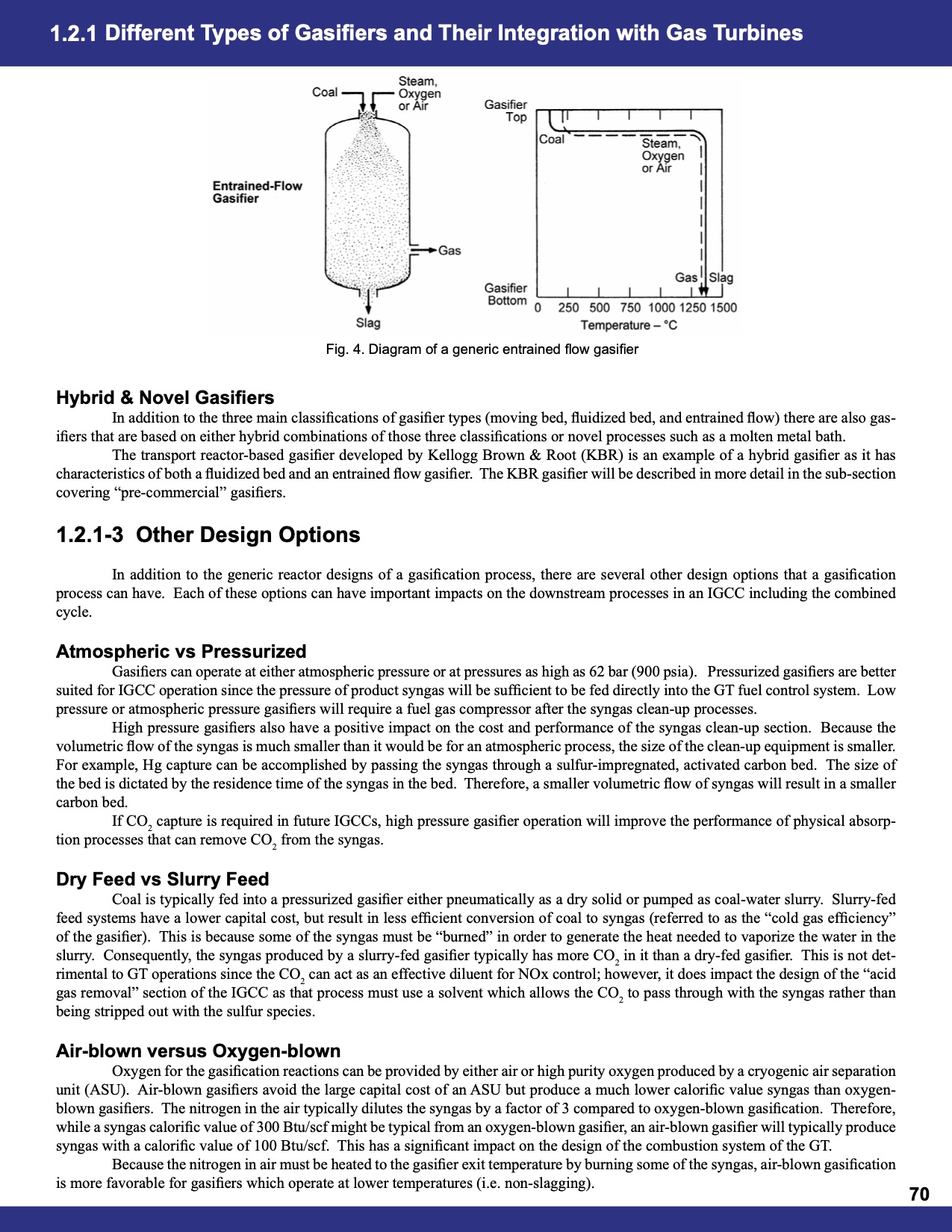
Fig. 4. Diagram of a generic entrained flow gasifier
Hybrid & Novel Gasifiers
In addition to the three main classifications of gasifier types (moving bed, fluidized bed, and entrained flow) there are also gas-
ifiers that are based on either hybrid combinations of those three classifications or novel processes such as a molten metal bath.
The transport reactor-based gasifier developed by Kellogg Brown & Root (KBR) is an example of a hybrid gasifier as it has
characteristics of both a fluidized bed and an entrained flow gasifier. The KBR gasifier will be described in more detail in the sub-section
covering “pre-commercial” gasifiers.
1.2.1-3 Other Design Options
In addition to the generic reactor designs of a gasification process, there are several other design options that a gasification
process can have. Each of these options can have important impacts on the downstream processes in an IGCC including the combined
cycle.
Atmospheric vs Pressurized
Gasifiers can operate at either atmospheric pressure or at pressures as high as 62 bar (900 psia). Pressurized gasifiers are better
suited for IGCC operation since the pressure of product syngas will be sufficient to be fed directly into the GT fuel control system. Low
pressure or atmospheric pressure gasifiers will require a fuel gas compressor after the syngas clean-up processes.
High pressure gasifiers also have a positive impact on the cost and performance of the syngas clean-up section. Because the
volumetric flow of the syngas is much smaller than it would be for an atmospheric process, the size of the clean-up equipment is smaller.
For example, Hg capture can be accomplished by passing the syngas through a sulfur-impregnated, activated carbon bed. The size of
the bed is dictated by the residence time of the syngas in the bed. Therefore, a smaller volumetric flow of syngas will result in a smaller
carbon bed.
If CO2 capture is required in future IGCCs, high pressure gasifier operation will improve the performance of physical absorp-
tion processes that can remove CO2 from the syngas.
Dry Feed vs Slurry Feed
Coal is typically fed into a pressurized gasifier either pneumatically as a dry solid or pumped as coal-water slurry. Slurry-fed
feed systems have a lower capital cost, but result in less efficient conversion of coal to syngas (referred to as the “cold gas efficiency”
of the gasifier). This is because some of the syngas must be “burned” in order to generate the heat needed to vaporize the water in the
slurry. Consequently, the syngas produced by a slurry-fed gasifier typically has more CO2 in it than a dry-fed gasifier. This is not det-
rimental to GT operations since the CO2 can act as an effective diluent for NOx control; however, it does impact the design of the “acid
gas removal” section of the IGCC as that process must use a solvent which allows the CO2 to pass through with the syngas rather than
being stripped out with the sulfur species.
Air-blown versus Oxygen-blown
Oxygen for the gasification reactions can be provided by either air or high purity oxygen produced by a cryogenic air separation
unit (ASU). Air-blown gasifiers avoid the large capital cost of an ASU but produce a much lower calorific value syngas than oxygen-
blown gasifiers. The nitrogen in the air typically dilutes the syngas by a factor of 3 compared to oxygen-blown gasification. Therefore,
while a syngas calorific value of 300 Btu/scf might be typical from an oxygen-blown gasifier, an air-blown gasifier will typically produce
syngas with a calorific value of 100 Btu/scf. This has a significant impact on the design of the combustion system of the GT.
Because the nitrogen in air must be heated to the gasifier exit temperature by burning some of the syngas, air-blown gasification
is more favorable for gasifiers which operate at lower temperatures (i.e. non-slagging).
70 |
